






CONTACT US

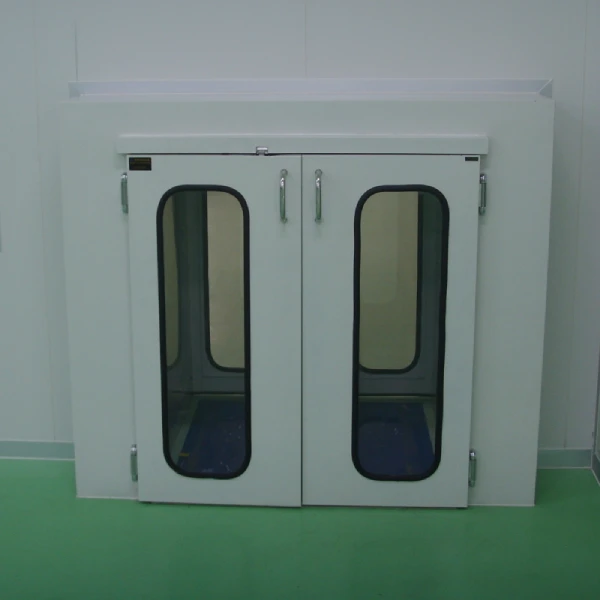
HPL Pass Box
Overview:
The pass box is a type of airflow isolation equipment in cleanrooms, which is divided into ordinary pass boxes and self-cleaning pass boxes. Self-cleaning pass boxes are equipped with fans and high-efficiency filters. During operation, they circulate purified clean air to the work area, maintaining
KEYWORDS:
DETAIL:
Product Introduction
The pass box is a type of airflow isolation equipment in cleanrooms, which is divided into ordinary pass boxes and self-cleaning pass boxes. Self-cleaning pass boxes are equipped with fans and high-efficiency filters. During operation, they circulate purified clean air to the work area, maintaining the cleanliness within the work area and effectively preventing cross-contamination between the rooms on both sides of the pass box.
Product Features
1. The box body is made of stainless steel, which has good resistance to acids, alkalis, and conventional cleaning agents. The internal design features rounded corners, eliminating cleaning dead zones, and the structure is reinforced, providing strong compatibility with clean rooms
2. Equip with a PAO inspection port to facilitate verification of the installation integrity of the high-efficiency filter, and also equip with a differential pressure gauge for real-time indication
3. Equipped with a user-friendly touchscreen interface, it features simple operation and allows for flexible setting of self-cleaning and sterilization time.
4. The control process can be flexibly set according to needs, greatly simplifying the cumbersome operations for users.
Frequently Asked Questions
- 1 How do electronic interlocks improve operation?
- 2 What installation method is best for sterile applications?
- 3 What sealing gasket maintenance is required?
- 4 What is the proper disinfection procedure for materials?
- 5 Is surface sampling required for pass-through chambers?
- 6 How should pass-through chambers be classified for cleanliness?
- 7 How does the door interlock system work?
- 8 What is the main purpose of a pass-through chamber?
1
How do electronic interlocks improve operation?
Electronic interlocks provide audio/visual alerts when doors are left open, prevent accidental damage from forced opening, enable BMS integration, and support access control with user data logging.
2
What installation method is best for sterile applications?
Use fully-welded stainless steel construction with continuous seam welds and smooth radius corners. This eliminates hard-to-clean cracks and crevices where contaminants can accumulate.
3
What sealing gasket maintenance is required?
Inspect EPDM or silicone gaskets for 250% compression when door closed. Replace if hardened, cracked, or loss of elasticity. Clean with 70% alcohol; avoid chlorine or strong acid cleaners that cause corrosion.
4
What is the proper disinfection procedure for materials?
Follow "clean first, then disinfect" - remove outer packaging, wipe with 70% isopropyl alcohol or 0.5% peracetic acid, place with spacing between items, and expose to UV for minimum 15 minutes (30 minutes recommended).
5
Is surface sampling required for pass-through chambers?
Yes. USP 797 requires surface sampling of all classified areas including pass-through chambers. Category 1/2 CSPs require monthly sampling; Category 3 requires weekly sampling and batch-end sampling.
6
How should pass-through chambers be classified for cleanliness?
Assign the ISO classification of the cleaner connected space. For example, if a pass-through connects ISO 8 to ISO 7, classify it as ISO 7. Industry best practice follows the higher standard of the two connected areas.
7
How does the door interlock system work?
The interlock (mechanical or electronic) allows only one door to open at a time. When one door opens, the opposite door automatically locks, creating an airlock that prevents cross-contamination and maintains room pressure differentials.
8
What is the main purpose of a pass-through chamber?
A pass-through chamber is an enclosure installed in a cleanroom wall to facilitate material transfer between areas while minimizing contamination risk. It reduces foot traffic, maintains differential pressure, and prevents unfiltered air exchange through interlocked doors.