






CONTACT US

Environmentally Friendly Flexible Isolator
Overview:
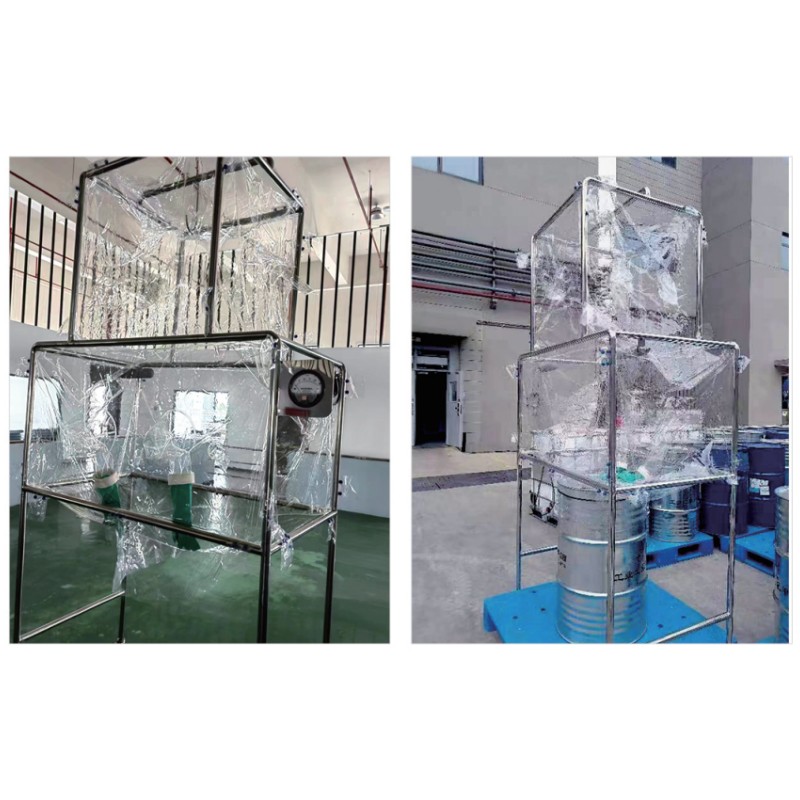
Flexible isolators are made of transparent film with low cost, portability, and full visibility during operation. Features: integrally welded film body and gloves; transfer seal door; H14 imported cylindrical HEPA filter with A/B/C/D cleanliness levels; PLC and SCADA control system with electronic
KEYWORDS:
DETAIL:
Product Introduction
Flexible isolators, also known as soft isolators, are made by connecting transparent films. They have a wide range of applications and offer advantages such as low cost, short production cycle, portability, and high efficiency. In terms of operational perspective, the use of fully transparent soft film welding ensures that the line of sight is not obstructed during operation, while also providing flexibility in operating distance. Flexible isolators can operate in diverse environments and meet process standards such as temperature and humidity control, low oxygen, sterility, and sealing.
Product Features
1. Both the body and the glove are integrally welded and molded using transparent film.
2. Equipped with a transfer seal door
3. Equipped with an H14 imported cylindrical high-efficiency filter, with internal cleanliness levels that can be designed as A/B/C/D
4. PLC controller, SCADA control system, meeting functions such as electronic signature, audit tracking, production batch reporting, PDF files, OPC UA, etc.
5. For use in a sterile environment, VHP online sterilization can be set up
Frequently Asked Questions
1
What are the advantages of isolator installation?
Isolators install in Grade D/C space (not Grade B), reducing air exchange requirements by factor of 100. Easier cleaning of stainless steel surfaces. Reduced classified space forces efficient resource use.
2
Why are isolators superior to traditional cleanrooms?
Operators are the major contamination source. Isolators eliminate operator-product contact. External materials are decontaminated with hydrogen peroxide (log-6 SAL). HEPA-filtered laminar airflow maintains aseptic conditions.